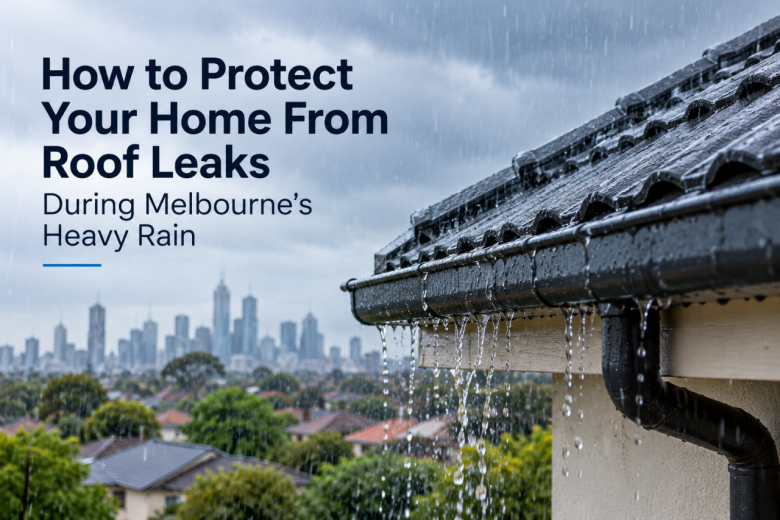
Melbourne’s unpredictable weather can quickly expose weaknesses in a home’s roofing system. If you notice water dripping from roof areas, damp ceiling patches or overflowing gutters during heavy rain, it may indicate an underlying problem that needs attention.
A roof that appears to be in good condition during dry weather may still have damaged tiles, deteriorated flashing, blocked gutters or drainage problems that become obvious when significant rain arrives.
Roof leaks are often easier to prevent when small warning signs are addressed early. Regular inspections, clean gutters and properly maintained roof drainage can reduce the likelihood of water entering the roof space and causing damage.
Here are some practical ways Melbourne homeowners can identify potential problems and protect their homes before the next major rainfall.
1. Check the Roof for Visible Damage
Damaged or displaced roofing materials are among the first things worth checking after severe weather.
Strong wind, falling branches and repeated exposure to Melbourne’s weather can contribute to:
- Cracked or broken roof tiles
- Displaced tiles
- Damaged metal roofing
- Loose ridge capping
- Deteriorated pointing
- Rust or corrosion
- Damaged flashing
Some problems may be visible from the ground, while others require a closer professional inspection.
Homeowners should avoid walking across a roof unless they have the appropriate experience and safety equipment. Roof surfaces can become slippery after rain, and damaged roofing materials may not safely support a person’s weight.
2. Keep Gutters and Downpipes Clear
Roof drainage plays an important role in preventing water from accumulating around the roof.
Leaves, branches, dirt and other debris can gradually build up inside gutters. When heavy rain arrives, blocked gutters may overflow and allow water to reach areas of the building that are not designed to handle continuous water exposure.
Regular gutter cleaning Melbourne can help keep rainwater moving through the gutter and downpipe system, particularly for homes surrounded by trees or properties that experience frequent debris buildup.
Downpipes should also be checked to make sure water can flow freely.
If water is overflowing from the gutter during rain, this should not simply be treated as a cleaning issue. It can indicate a blocked downpipe, inadequate drainage capacity, incorrect fall or another problem within the roof drainage system.
Homes surrounded by large trees may require more frequent gutter maintenance because leaves and other debris can accumulate quickly.
3. Pay Attention to Flashing and Roof Junctions
Flashing is used around areas where different roof surfaces or structures meet. These can include chimneys, skylights, valleys, walls and other roof penetrations.
Because these areas are exposed to weather and movement, damaged or deteriorated flashing can become a source of water entry.
Skylights are another area that deserves attention during a roof inspection. The flashing and seals around a skylight need to remain weather resistant, as deterioration around the installation can allow water to enter the roof space. If you are considering skylights installation Melbourne, proper flashing, sealing and integration with the existing roof should be considered as part of the installation.
Warning signs can include:
- Water staining around ceilings
- Damp areas near roof junctions
- Deteriorated sealants
- Rust around metal flashing
- Visible gaps
- Recurring leaks in the same location
A roof leak does not always appear directly below the point where water enters. Water can travel along roofing materials and structural components before becoming visible inside the home.
For that reason, simply patching the area where a ceiling stain appears may not address the underlying source.
4. Look for Signs Inside the Roof Space
The roof space can provide useful clues about developing moisture problems.
After significant rainfall, homeowners may notice:
- Damp insulation
- Water staining on timber
- Mould growth
- Musty smells
- Damp roof decking
- Discolouration around roof penetrations
- Visible water marks
Not every roof leak will produce an obvious drip. A small amount of moisture entering repeatedly can eventually affect insulation, timber and other building components.
If moisture is discovered in the roof space, identifying where it entered is more important than simply drying the affected area.
5. Do Not Ignore Small Ceiling Stains
A small brown or yellow mark on a ceiling may seem insignificant, particularly if it disappears after the weather improves.
However, recurring staining or water dripping from roof areas can indicate that moisture is entering the home during rainfall.
The source could be associated with damaged tiles, flashing, valleys, roof penetrations, gutters or other parts of the roofing system.
Homeowners should keep an eye on any recurring marks and note when they appear. For example, a stain that becomes noticeable only during heavy rain or wind driven rain can provide useful information when the roof is inspected.
If water is actively entering the home, professional leaking roof repair Melbourne may be required to identify and address the source.
6. Check Roof Plumbing and Drainage Components
Roof plumbing is not limited to fixing leaks. It also involves managing the movement of rainwater across the roof and into the property’s drainage system.
Valleys, gutters, downpipes, box gutters and other drainage components need to work together so that rainwater can leave the roof efficiently.
Problems can occur when these components become blocked, damaged, poorly connected or unable to cope with the volume of water reaching them.
A professional roof plumbing Melbourne inspection can help identify drainage issues that may not be obvious from inside the home.
Regular attention to these components can be particularly important before periods of heavy rainfall.
7. Check the Roof After Severe Weather
A roof inspection can be particularly useful after a major storm.
Look from the ground for obvious changes such as:
- Missing or displaced tiles
- Loose roofing materials
- Damaged gutters
- Fallen branches
- Visible metal damage
- Debris collecting in valleys
- Overflowing gutters
Inside the home, check ceilings and the roof space for signs of moisture.
If storm damage is visible, avoid climbing onto the roof yourself. A professional can assess the condition safely and determine whether immediate repairs are required.
8. Understand the Difference Between a Leak and a Roofing Problem
A leak is a symptom rather than necessarily the underlying problem.
For example, water entering a ceiling could be caused by:
- A broken tile
- Deteriorated flashing
- Blocked drainage
- Damaged valley materials
- A failed roof penetration
- Deteriorated pointing
- Corrosion
- Storm damage
This is why finding the actual entry point matters.
Applying sealant to the visible area may provide a temporary improvement but may not resolve the cause if water is entering somewhere else.
A proper inspection should focus on identifying the source and determining what repair is appropriate.
9. Maintain the Roof Before Problems Become Urgent
Preventive maintenance does not mean replacing a roof unnecessarily.
Instead, it means identifying developing problems while they can still be addressed.
A maintenance inspection may identify minor issues such as damaged tiles, deteriorating pointing, surface corrosion or blocked drainage before they contribute to more extensive water damage.
The appropriate maintenance schedule depends on the property’s location, roof material, surrounding trees, previous repairs and exposure to weather.
Homes surrounded by large trees may require more frequent gutter attention, while older roofs may benefit from periodic professional inspections.
10. Know When to Call a Professional
Some roof maintenance can be identified from ground level, but roofing work itself can involve significant safety risks.
Professional assessment is particularly important when:
- Water is actively entering the home
- The roof has visible storm damage
- Several tiles are damaged
- Gutters repeatedly overflow
- A leak keeps returning
- The source of a leak cannot be identified
- There is significant corrosion
- Water is accumulating around roof drainage points
A professional inspection can help determine whether the issue requires a simple repair, drainage work, restoration or more extensive roofing work.
Final Thoughts
Heavy rain does not necessarily cause roof leaks by itself. In many cases, rainfall simply reveals weaknesses that have developed gradually through weather exposure, ageing, poor drainage or previous damage.
Keeping gutters clear, checking for visible roof damage, monitoring ceiling stains and paying attention to drainage problems can help homeowners identify issues earlier.
Most importantly, a visible water stain should not automatically be treated as the location of the leak. The water may have entered elsewhere and travelled before becoming visible inside the home.
Taking action when you first notice warning signs can help prevent a minor roofing issue from becoming more extensive water damage. Whether you notice damp ceiling marks, overflowing gutters or water dripping from roof areas during heavy rain, identifying the underlying cause early can help protect your home.